Rent or buy decisions for heavy equipment often shape costs, planning, and long-term project outcomes. Businesses face this choice across construction, agriculture, and infrastructure work. Equipment expenses can influence overall project profitability. Some projects need machines for short periods only. Others rely on consistent equipment access over months or years. Budget structure often drives early decisions. Cash availability affects purchasing ability. Rental options provide access without ownership pressure. Buying equipment can support repeated use over time. Storage and transport also affect total costs. Maintenance responsibilities vary by option. Equipment availability can change with demand. Project timelines influence flexibility needs. Each factor plays a role in choosing wisely.
Equipment Renting Benefits
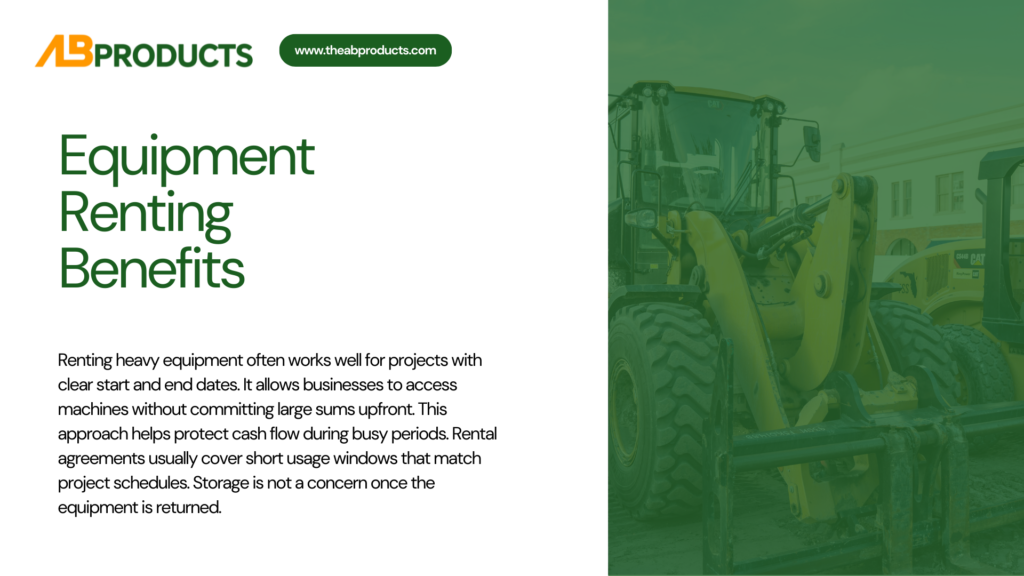
Renting heavy equipment often works well for projects with clear start and end dates. It allows businesses to access machines without committing large sums upfront. This approach helps protect cash flow during busy periods. Rental agreements usually cover short usage windows that match project schedules. Storage is not a concern once the equipment is returned. Maintenance responsibilities often stay outside the renter’s scope. This reduces surprise expenses tied to breakdowns. Renting also supports changing equipment needs across different job phases. If a task requires a specific machine, it can be sourced only for that period. Seasonal work becomes easier to manage with rentals. Idle time does not create extra costs. Budget planning stays simpler when payments align with use. Transport services may be included depending on location. Overall, renting supports flexibility across varied workloads.
Lower Initial Spending
Renting heavy equipment reduces upfront financial pressure. Businesses avoid large purchase payments. Funds stay available for labor and materials. Rental costs match project timelines closely. Short jobs avoid long-term expenses. Equipment returns remove storage needs. Repair responsibility often stays with providers. Unexpected breakdowns cause fewer cost concerns. Budget planning stays predictable. Seasonal work becomes easier to manage. Equipment access adjusts by project phase. Transport options may be included. Idle time does not create losses. Financial exposure remains limited.
Project-Based Flexibility
Renting allows access to equipment only when needed. Different machines can be used per task. Specialized equipment becomes easier to obtain. Project scope changes stay manageable. Equipment size can shift as work progresses. Downtime risk lowers with replacement access. Storage space stays minimal. Short deadlines benefit from quick availability. Newer models may be accessible. Testing equipment before buying becomes possible. Rental periods match workload needs. Scheduling stays adaptable. Equipment variety supports diverse projects. Planning remains flexible.
Equipment Buying Advantages
Buying heavy equipment offers full access whenever work demands it. Projects do not rely on outside availability once ownership is secured. This can be helpful for long-term or repeat tasks. Familiar machines allow operators to work with confidence over time. Scheduling becomes more predictable without return deadlines. Equipment stays ready for urgent or unplanned work. Ownership supports customization based on specific job needs. Long usage periods may offset the initial purchase cost. Assets remain available across multiple projects. Purchased equipment can support business stability. Over time, ownership may support cost recovery through resale. Maintenance history stays known and controlled. Storage planning becomes part of daily operations. Buying often suits businesses with steady workloads.
Long Term Availability
Buying equipment ensures constant access. Projects avoid rental availability limits. Machines remain ready for repeated tasks. Long-term jobs gain consistency. Scheduling stays internal. Equipment setup stays familiar. Operator confidence improves over time. No return deadlines affect planning. Usage stays unrestricted. Equipment supports urgent work needs. Ownership removes rental coordination. Workflows stay predictable. Equipment remains on-site. Control supports stable operations.
Ownership Cost Recovery
Purchased equipment holds resale potential. Assets support long-term planning. Depreciation follows expected schedules. Equipment can be sold later. Value depends on condition and use. Long service life supports cost recovery. Ownership may support tax planning. Equipment contributes to balance sheets. Consistent use offsets purchase costs. Trade-in options may exist. Equipment supports business growth. Market demand affects resale value. Ownership builds operational stability. Assets retain measurable worth.
Cost Comparison Points
Cost evaluation plays a major role in deciding whether to rent or buy. Renting usually fits short projects where long-term expenses are unnecessary. Payments reflect actual use rather than ownership duration. Buying involves higher upfront spending that impacts cash reserves. Maintenance and repair costs shift to the owner after purchase. Storage and insurance add ongoing expenses. Depreciation affects equipment value over time. Rental costs may add up if use extends longer than planned. Ownership can balance costs when equipment sees frequent use. Idle time affects buying more than renting. Financing options can increase total purchase costs. Transport fees may differ between options. Market resale values can vary. Total cost depends on usage patterns and planning accuracy.
Short Term Costs
Renting suits brief projects well. Costs align closely with usage periods. Maintenance expenses stay limited. Repairs usually fall outside the renter’s responsibility. Storage costs disappear after use. Transport fees may be bundled. Budget forecasting stays simpler. Idle time does not increase expenses. Seasonal demand remains manageable. Financial risk stays low. Equipment returns end payments. Planning focuses on project scope. Cash flow remains steady. Short-term use favors rentals.
Long-Term Costs
Buying requires higher initial spending. Maintenance becomes ongoing. Storage space adds a recurring expense. Repairs fall to owners. Insurance adds yearly costs. Depreciation reduces asset value. Idle equipment affects cost recovery. Financing may add interest costs. Long-term use may balance expenses. Frequent use supports ownership value. Planning requires longer timelines. Equipment upgrades cost more. Resale value varies by market. Ownership suits steady workloads.
Making The Choice
Choosing between renting and buying depends on how the equipment supports daily operations. Project length often guides the first decision. Short-term work usually favors renting. Long-term or repeated tasks may support ownership. Budget structure influences available options. Cash reserves affect buying ability. Storage space matters for owned equipment. Staff experience impacts maintenance planning. Local availability can shape rental access. Business growth plans affect long-term needs. Risk tolerance plays a role in decision-making. Equipment variety may change across projects. Planning clarity improves outcomes. The right choice balances cost, access, and workload stability.
Project Duration Needs
Project length strongly affects decisions. Short jobs favor rental use. Long jobs may justify ownership. Repeated tasks benefit from buying. Seasonal work suits renting. Deadlines influence equipment access needs. Transport distance affects cost outcomes. Site storage limits matter. Equipment variety changes by phase. Scope changes favor flexibility. Stable workloads support ownership. Planning accuracy improves outcomes. Timeline clarity guides decisions. Usage frequency matters most.
Business Capacity Review
Budget structure shapes choices. Cash reserves affect buying power. Staff skill levels influence maintenance ability. Storage availability affects ownership feasibility. Growth plans shape long-term needs. Risk tolerance guides strategy. Equipment management requires time. Rental coordination reduces oversight tasks. Ownership demands ongoing attention. Local availability affects rental access. Internal systems support ownership success. Planning depth matters. Capacity limits shape outcomes. Operations guide final decisions.