
Gold and silver jewelry have stayed popular for everyday wear and special occasions for a long time, mainly because each metal brings its own look and feel. People often weigh their options by thinking about appearance, price, and how well each one holds up with regular use. Jewelry choices tend to reflect personal style, skin tone, and daily routines. Some people are drawn to warmer tones that feel classic and noticeable. Others prefer cooler shades that look clean and understated. Cost often matters, especially for those planning to wear the same pieces for years. Durability becomes important for jewelry worn often. Maintenance also affects how satisfied someone feels over time. Cultural traditions influence preferences in many places. Fashion trends can shift interest from one metal to another. Practical concerns usually shape the final choice. Knowing these basics makes it easier to decide which metal feels right.
Visual Style Comparison
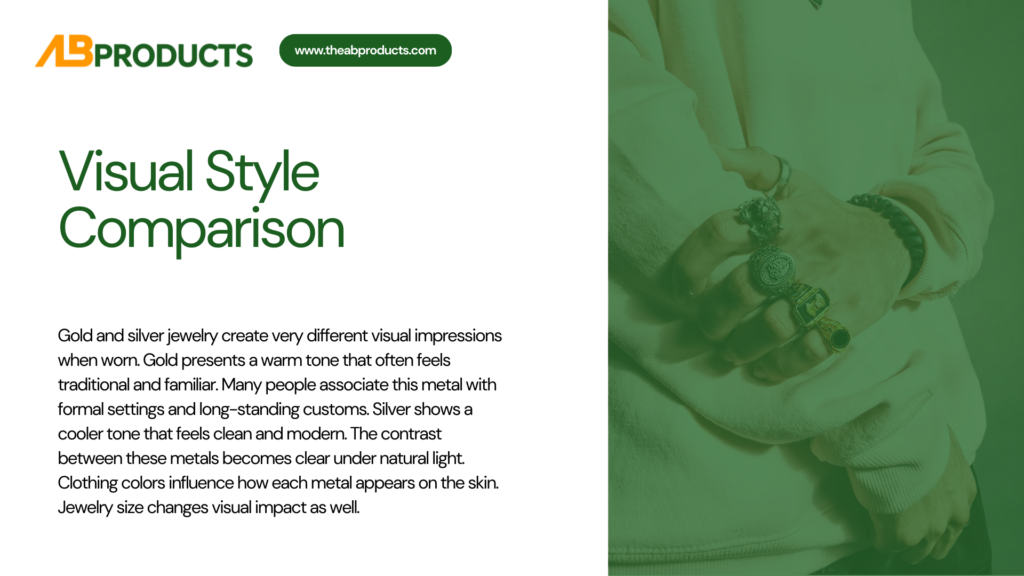
Gold and silver jewelry create very different visual impressions when worn. Gold presents a warm tone that often feels traditional and familiar. Many people associate this metal with formal settings and long-standing customs. Silver shows a cooler tone that feels clean and modern. The contrast between these metals becomes clear under natural light. Clothing colors influence how each metal appears on the skin. Jewelry size changes visual impact as well. Small gold pieces feel subtle yet noticeable. Large silver pieces feel bold without feeling heavy. Personal style often guides which look feels right. Some prefer consistency across accessories. Others enjoy switching based on mood or outfit. Visual preference remains a strong deciding factor.
Gold Color Appeal
Gold jewelry carries a warm tone that often stands out against the skin. The color gives a rich and classic look that feels familiar across generations. Many associate gold with formal events and traditional styles. The metal reflects light in a softer way that feels smooth and steady. Yellow gold appears bold without feeling loud. Rose gold offers a softer variation that feels gentle and modern. White gold leans closer to silver in appearance with added warmth. Gold pieces often feel noticeable even in simple designs. Many outfits pair easily with gold accents. The color tends to remain consistent over time. Scratches may blend into the surface. This helps gold maintain a polished look.
Silver Color Appeal
Silver jewelry offers a cool tone that feels clean and modern. The color pairs well with neutral and cool colored clothing. Many prefer silver for casual and everyday wear. The shine appears bright and reflective under light. Silver often gives a lighter visual presence on the skin. The metal suits minimal designs and sharp details. Many view silver as understated and flexible. Silver jewelry works well in layered styles. The color often highlights gemstones clearly. Over time, the surface may darken slightly. Regular care restores its brightness. The look remains fresh with simple upkeep.
Cost and Value
Cost often plays a central role when choosing between gold and silver jewelry. Gold typically carries a higher purchase price from the start. This cost reflects scarcity and long-standing market demand. Silver offers a lower entry point for many buyers. This makes it easier to build a varied collection. Gold purchases often feel more intentional and planned. Silver suits frequent style changes and seasonal trends. Value perception differs from person to person. Some focus on long-term ownership. Others value flexibility and variety. Maintenance costs influence overall spending. Resale potential matters to certain buyers. Both metals hold value in different ways.
Price Range Differences
Gold jewelry often carries a higher upfront cost. The price reflects metal purity and market demand. Gold prices tend to remain stable over long periods. Silver usually offers a lower entry price for buyers. This makes silver more accessible for frequent purchases. Many choose silver for trend-based designs. Gold suits long-term investment pieces. The weight of gold strongly affects the price. Silver pricing depends more on design size. Budget planning often favors silver for variety. Gold purchases feel more deliberate. Both metals offer value in different ways.
Long Term Worth
Gold jewelry often holds resale value better over time. Many markets accept gold based on weight and purity. Silver resale value varies more by condition. Gold remains desirable across cultures. This supports long-term demand. Silver value can shift with fashion trends. Heirloom pieces often feature gold. This reflects lasting appeal. Gold jewelry often passes through generations. Silver suits personal collections. Long-term worth depends on care and storage. Both metals reward mindful ownership.
Durability and Lifespan
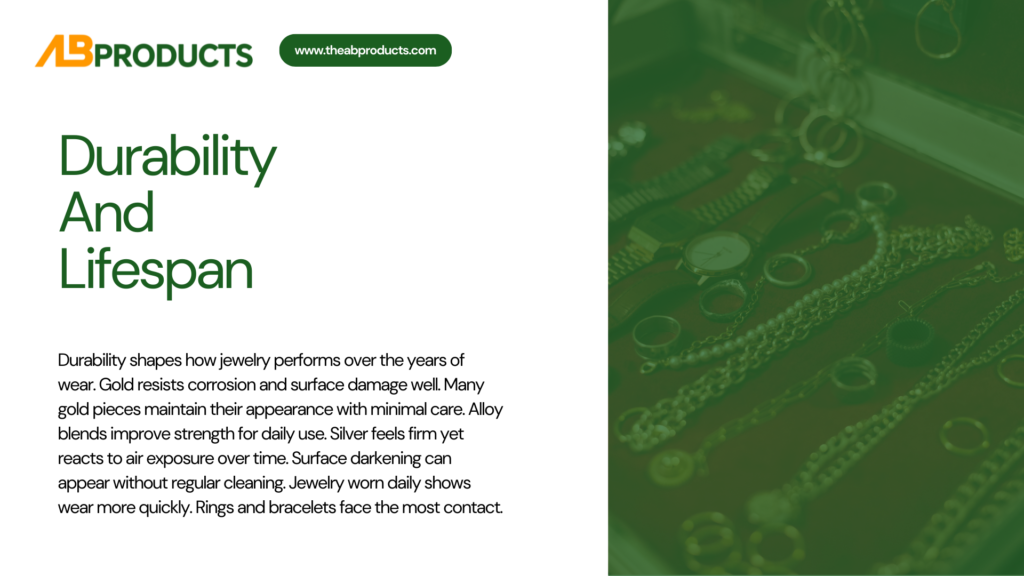
Durability shapes how jewelry performs over the years of wear. Gold resists corrosion and surface damage well. Many gold pieces maintain their appearance with minimal care. Alloy blends improve strength for daily use. Silver feels firm yet reacts to air exposure over time. Surface darkening can appear without regular cleaning. Jewelry worn daily shows wear more quickly. Rings and bracelets face the most contact. Storage habits influence lifespan greatly. Soft pouches reduce surface marks. Cleaning routines extend usable life. Both metals last long with proper handling. Wear habits shape long-term results.
Daily Wear Strength
Gold jewelry resists rust and corrosion naturally. Pure gold bends easily yet alloys improve strength. Many gold pieces handle daily wear well. Scratches appear softer on gold surfaces. Silver feels firm yet reacts to air exposure. Tarnish may appear over time. Daily wear affects silver more quickly. Rings and bracelets show signs first. Proper care extends lifespan for both metals. Storage reduces surface changes. Gold needs less frequent cleaning. Silver benefits from routine polishing.
Longevity Over Time
Gold jewelry often lasts for decades with minimal change. The metal maintains structure and color well. Silver jewelry can last long with consistent care. Environmental exposure affects silver more directly. Humidity speeds surface changes. Gold remains stable in most conditions. Many antique gold pieces remain intact today. Silver antiques often show patina. Some value this aged look. Longevity depends on usage habits. Both metals support long-term ownership. Care habits shape results.
Skin Tone Matching
Skin tone often affects how jewelry appears once worn. Gold tends to complement warmer undertones naturally. The metal blends smoothly with golden or olive skin shades. Silver pairs well with cooler undertones. The contrast can make features appear sharper. Neutral skin tones suit both metals comfortably. Lighting changes perception throughout the day. Natural light shows true color interaction best. Trying jewelry near the face offers clarity. Comfort matters more than strict guidelines. Personal preference often outweighs theory. Confidence improves overall appearance. Skin tone serves as a helpful reference point.
Warm Skin Tones
Gold jewelry often complements warm skin tones well. Yellow and rose gold enhance natural warmth. The metal blends smoothly with golden undertones. Many notice a balanced appearance with gold. The skin may appear brighter. Gold highlights warmth without overpowering. Warm-toned outfits pair easily with gold. The look feels cohesive and natural. Many traditional styles favor this pairing. Personal comfort plays a role. Confidence often follows visual harmony. Gold remains a popular choice here.
Cool Skin Tones
Silver jewelry suits cool skin tones naturally. The metal mirrors cooler undertones well. Many feel silver sharpens their overall look. The contrast appears clean and balanced. Silver highlights fair and cool complexions. White metals often feel lighter visually. Outfits with cool shades pair smoothly. Many modern styles lean toward silver. The look feels simple and fresh. Skin appears clearer under silver tones. Comfort guides preference here. Silver remains widely chosen.
Styling and Mixing
Styling choices influence how gold and silver work together. Mixing metals has become widely accepted in modern fashion. Balanced placement creates a cohesive appearance. Layered pieces help blend tones smoothly. Simple designs prevent visual overload. Neutral outfits support mixed metal looks well. Repetition across accessories improves harmony. Rings provide an easy entry point for mixing. Necklaces create layered depth when styled thoughtfully. Intentional choices matter more than strict rules. Personal taste defines success. Every day wear often favors flexibility. Mixing metals feels relaxed and current.
Wearing Both Metals
Many people mix gold and silver in one outfit. Balanced placement creates a cohesive look. Layered necklaces often blend metals well. Rings offer subtle mixing options. The contrast adds visual interest. Neutral clothing supports mixed metals. Intentional styling avoids clutter. Simple designs work best. Mixed metals feel modern and relaxed. Personal taste guides balance. Confidence shapes success. The look suits everyday wear.
Outfit Pairing Tips
Gold jewelry pairs well with warm colors. Earth tones support gold pieces nicely. Silver matches cool shades and monochrome looks. Black outfits suit both metals well. Casual outfits favor silver simplicity. Formal wear often highlights gold accents. Texture matters in pairing choices. Matte finishes feel subtle. Polished finishes stand out. Jewelry size affects balance. Thoughtful pairing improves comfort. Style remains personal.