
Color choices inside a home shape mood, comfort, and daily behavior in subtle yet lasting ways. Each shade creates a quiet message that people feel before they notice details. Walls, furniture, and accents work together to form emotional balance. Light exposure changes how tones appear throughout the day. Personal taste plays a role, though shared spaces benefit from thoughtful planning. Cultural background influences color meaning across households. Some colors feel calming during rest hours. Others feel energized during active moments. Room purpose guides better color selection. Bedrooms often need a softer visual impact. Living areas support social interaction through balanced tones. Small spaces respond well to lighter palettes. Larger rooms handle deeper shades with ease.
Room Color Choices
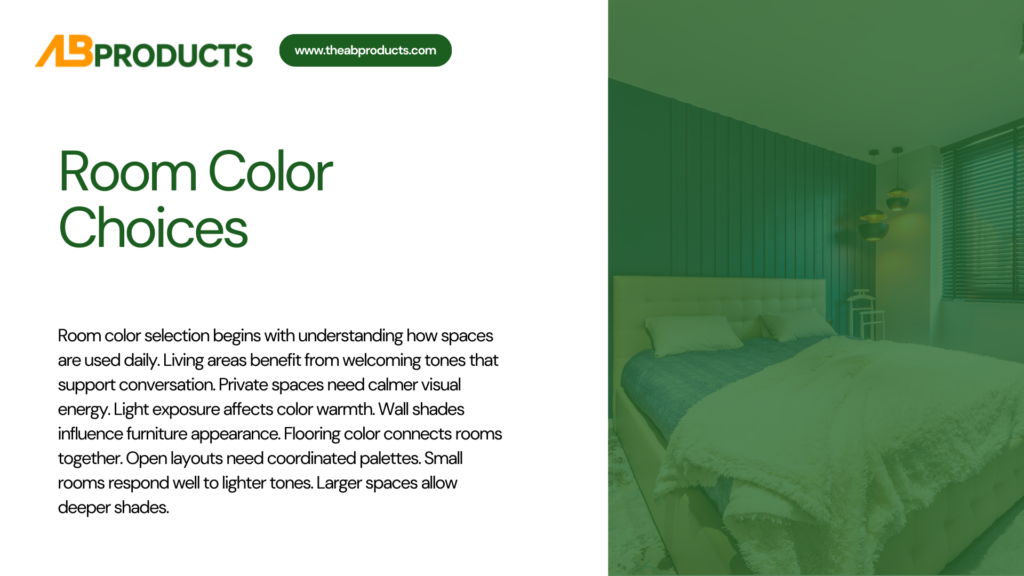
Room color selection begins with understanding how spaces are used daily. Living areas benefit from welcoming tones that support conversation. Private spaces need calmer visual energy. Light exposure affects color warmth. Wall shades influence furniture appearance. Flooring color connects rooms together. Open layouts need coordinated palettes. Small rooms respond well to lighter tones. Larger spaces allow deeper shades. Repetition of color builds flow. Accent shades add interest without clutter. Texture affects how color is perceived. Balanced contrast keeps rooms comfortable. Purpose should guide every color choice.
Living Room Tones
Living rooms serve as gathering spaces for conversation and rest. Color selection shapes how welcoming the area feels. Neutral shades offer flexibility for decor updates. Warm tones support comfort during long evenings. Cooler shades create a relaxed visual pace. Natural light changes how paint appears across walls. Accent colors add interest without visual overload. Earth-based hues connect interiors with outdoor views. Balanced contrast keeps the room from feeling flat. Soft textures strengthen color perception. Consistent tones support visual flow between spaces. Wall color should support seating fabrics. Ceiling shades affect room height perception. Thoughtful combinations help the space feel settled.
Bedroom Color Moods
Bedrooms benefit from calm and steady color choices. Soft hues support rest and quiet routines. Cool shades often feel soothing at night. Muted tones reduce visual stress after busy days. Light colors help smaller bedrooms feel open. Dark shades suit larger rooms with ample light. Wall color works best when paired with gentle lighting. Bedding colors influence overall balance. Repetition of similar tones supports comfort. Sharp contrasts feel distracting in sleep spaces. Natural-inspired colors feel familiar and grounding. Personal preference still guides final selection. Subtle variation keeps the room interesting. Harmony supports better relaxation patterns.
Color Theory Basics
Color theory explains how shades interact within a space. It helps guide balanced combinations. Understanding basic color groups supports better decisions. Placement affects how colors feel together. Light changes how tones appear. Saturation controls visual strength. Contrast adds clarity when used carefully. Harmony prevents visual strain. Repeated tones create unity. Accent colors highlight key areas. Neutral shades stabilize stronger hues. Color theory supports both style and comfort. Simple rules guide consistent results. Awareness improves overall home design.
Primary Color Roles
Primary colors form the base of all other shades. Red brings warmth and a strong presence. Blue offers calm and steady energy. Yellow adds brightness and cheer. Each primary color carries emotional weight. Small amounts influence room tone quickly. Overuse creates visual fatigue. Balanced placement keeps spaces comfortable. Primary shades work well in accents. Furniture pieces benefit from controlled use. Walls need softer versions for balance. Light levels affect intensity perception. Natural materials soften bold colors. Careful spacing supports visual comfort.
Secondary Color Use
Secondary colors blend primary tones. Green often feels restful and balanced. Purple suggests depth and quiet focus. Orange supports warmth and activity. These colors suit feature walls or decor. Softer versions feel easier on the eyes. Strong saturation works best in small areas. Natural light affects tone clarity. Surrounding colors shape the overall effect. Secondary shades pair well with neutrals. Texture helps soften bold appearances. Consistent undertones prevent clashes. Color repetition supports unity. Measured use keeps rooms welcoming.
Warm Cool Balance
Warm and cool colors affect emotional response. The balance between them creates comfort. Warm tones add energy. Cool tones slow the visual pace. Light direction changes the color feel. North-facing rooms benefit from warmth. Bright rooms handle cooler shades well. Furniture color influences balance. Flooring adds warmth or coolness. Accent colors correct the imbalance. Even distribution prevents extremes. Texture softens strong tones. Room purpose guides choice. Balanced palettes support daily living.
Warm Color Effects
Warm colors bring energy into a space. Red-based shades feel cozy and active. Orange tones support social settings. Yellow shades brighten dim areas. Warm palettes suit north-facing rooms. Excess warmth may feel heavy. Balanced lighting keeps comfort intact. Warm accents add focus points. Wood elements support these tones well. Fabric choices affect warmth perception. Matte finishes reduce intensity. Large spaces handle warmth better. Small rooms need restraint. Thoughtful balance keeps harmony.
Cool Color Effects
Cool colors create a calm visual rhythm. Blue shades support rest and focus. Green tones feel natural and steady. Purple adds quiet depth. Cool palettes suit bright rooms. Shade softness affects comfort level. Too much coolness may feel distant. Warm accents restore balance. Natural textures soften cool tones. Light reflection changes color strength. Consistent use supports flow. Cool walls suit work areas. Bedrooms benefit from gentle cool shades. Proper balance keeps spaces inviting.
Color Harmony Methods
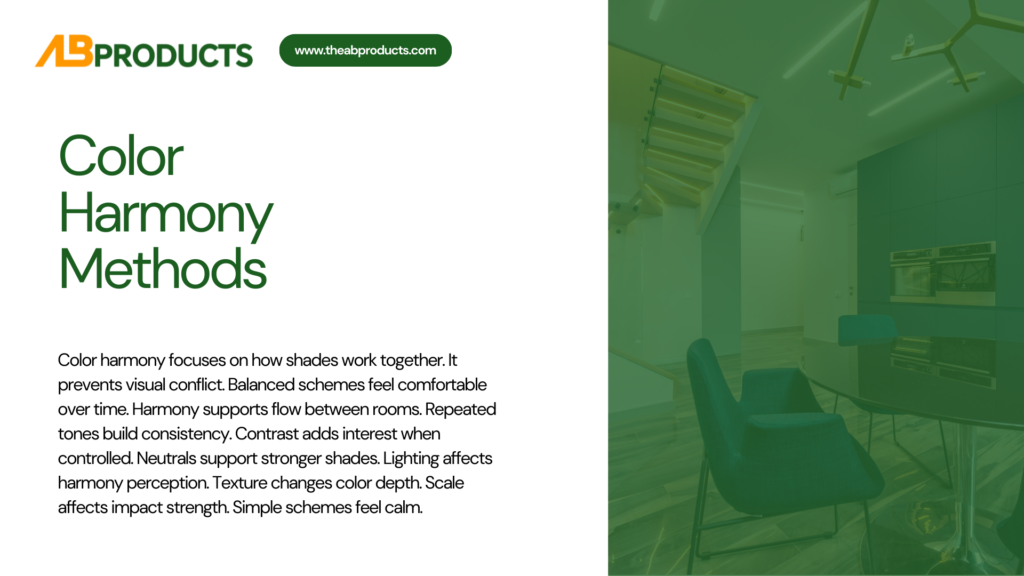
Color harmony focuses on how shades work together. It prevents visual conflict. Balanced schemes feel comfortable over time. Harmony supports flow between rooms. Repeated tones build consistency. Contrast adds interest when controlled. Neutrals support stronger shades. Lighting affects harmony perception. Texture changes color depth. Scale affects impact strength. Simple schemes feel calm. Complex schemes need restraint. Harmony improves daily comfort. Thoughtful planning leads to lasting results.
Monochrome Color Schemes
Monochrome schemes rely on one main color. Shade variation creates visual interest. Light and dark versions add depth. Texture prevents a flat appearance. This method suits minimalist interiors. Calm flow moves easily between rooms. Furniture blends smoothly with the walls. Accent pieces stand out gently. Lighting plays a major role. Natural light enhances subtle shifts. Artificial light changes the tone of warmth. Consistency supports peaceful settings. This approach suits small homes well. Careful planning avoids dullness.
Complementary Color Pairing
Complementary colors sit opposite on the color wheel. This pairing creates contrast and energy. Controlled use prevents visual strain. One color should dominate the space. The second color works as an accent. Neutral tones soften the effect. Furniture placement guides balance. Wall color stays restrained. Decor carries a stronger contrast. Lighting affects color intensity. Even spacing keeps harmony intact. Texture reduces sharp transitions. This method suits social spaces. Thoughtful restraint maintains comfort.
Color Mood Impact
Color affects emotional comfort at home. Daily exposure shapes mood patterns. Soft tones support relaxation. Brighter shades support activity. Dark shades bring intimacy. Balance prevents fatigue. Light changes emotional response. The room’s purpose affects mood needs. Personal experience shapes preference. Cultural meaning influences feeling. Repetition strengthens emotional cues. Color consistency builds stability. Sudden contrast disrupts comfort. Planned use supports well-being.
Emotional Color Influence
Color shapes emotional response in daily life. Soft tones reduce stress levels. Bright shades support alertness. Dark colors create intimacy. Repeated exposure builds mood patterns. Home routines align with color cues. Visual comfort supports relaxation. Overstimulation causes fatigue. Balanced palettes promote stability. Natural hues feel familiar. Cultural meaning shapes perception. Personal history affects preference. Lighting alters emotional tone. Harmony supports long-term comfort.
Daily Living Spaces
Each room supports different activities. Kitchens benefit from clean colors. Dining areas feel warmer with soft tones. Workspaces need a steady visual focus. Bathrooms suit light reflective shades. Hallways benefit from continuity. Open plans need unified palettes. Accent colors guide movement. Consistent undertones prevent clashes. Furniture color supports function. Flooring ties spaces together. Wall colors influence energy flow. Visual balance supports daily comfort. Thoughtful planning improves the home experience.